
Sarasota Previous Residents by Era
A backward address trail begins with the current Sarasota parcel, then changes sources as it passes web, county, and federal cutoffs. The era table prevents an online gap from being mistaken for a missing record. It also distinguishes landowners from people who occupied the building.
| Source | Local years covered | Where held | What it can show |
|---|---|---|---|
| Clerk web index | 1990 to present | Official Records portal | Indexed deeds, party roles, dates, book/page, images |
| Sarasota record books | 1921 to present | Clerk Public Access | Earlier deeds, plats, liens, and notices |
| Pre-county deeds | Before July 1, 1921 | Manatee custodian or archives | Predecessor ownership chain |
| Polk directories | Documented editions from 1918 to 1999, with gaps | History Center / State Library | Names, addresses, work, and spouse notations |
| Hill-Donnelly | Exact years require confirmation | History Center, offsite | Listed occupants by street and number |
| Federal census | Public through 1950 | NARA and library databases | Household, relationships, tenure, and place |
| City permits | Online strongest from 1997 | City portal and archive request | Work, owner, contractor, parcel, and dates |
| Sanborn maps | 1925, 1929, and 1940 documented | Library of Congress / History Center | Building footprint, use, material, and numbering |
Start with deeds for ownership, reverse directories for occupants, and permits or maps for the structure. Add census and newspapers only after the address has been matched to the right parcel and time.
Anchor Sarasota House History
The Bill Furst, Sarasota County Property Appraiser supplies the current owner, tax mailing address, situs, parcel ID, legal description, sales, exemptions, year built, and map link. Save the legal description exactly. Street labels can change, but a lot-and-block or other recorded description can connect an old deed to the present site.
A mailing address is not proof of residence. It tells where tax mail goes. Homestead is stronger evidence that an owner occupies the property, yet it still does not name every household member. A qualified sale can identify a likely purchase, while a family, corrective, or other non-arm's-length transfer may appear differently. Read the deed and its qualification code before drawing a conclusion about previous residents.
Walk Sarasota Deeds Backward
The Sarasota County Clerk of the Circuit Court and County Comptroller indexes deeds by party name. Find the current purchase deed and compare its parcel or legal description with the assessor card. The buyer is usually the grantee; the seller is the grantor. Each seller can then be searched as a grantee in an earlier date range.
- Copy the current parcel ID, legal description, owner, and qualified sale from the assessor.
- Search that owner in Clerk Official Records, limit the document type to deed, and open the likely purchase.
- Record the grantor, grantee, execution and recording dates, instrument number, and book/page.
- Search the seller as an earlier buyer. Confirm the same legal description before accepting the link.
- At 1990, continue through Clerk Public Access and microfilm. Before county creation, move to Manatee records.
Mortgages, satisfactions, liens, judgments, and probate-related deeds may confirm dates or relationships, but only a valid conveyance advances the title chain. A deed says who held title. It does not prove who slept in the house.
- Grantor / grantee
- The person transferring an interest and the person receiving it.
- Chain of title
- The linked sequence of recorded transfers for the same land.
- Legal description
- The formal land description that remains useful when a street address changes.
- Criss-cross directory
- A directory arranged by address, often naming a listed occupant or business.
Sarasota's 1921 Records Divide
Sarasota County separated from Manatee County effective July 1, 1921. Older deeds, estates, court files, and election material may therefore sit with a Manatee custodian. This is a jurisdiction break, not proof of destroyed records. Sarasota Official Records run from county creation to the present, while the convenient permanent web index begins in 1990.
The first Sarasota County court operated in the Hover Arcade. The permanent Mediterranean Revival courthouse opened in February 1927 after Charles and Edith Ringling conveyed land for it. That local story still has a practical effect: a previous-residents search spanning the early 1920s may require both counties, and directory publishers may have kept Sarasota within a Bradenton or Manatee volume even after government boundaries changed.
Match Sarasota Directories to Census
Owners are only one part of past Sarasota households. Polk alphabetical entries can show a surname, given name, spouse notation, occupation, employer, and address. Hill-Donnelly reverses the order so an address leads to a listed occupant or business. Ordinary city directories are onsite at the Sarasota County History Center. Hill-Donnelly volumes and telephone books are offsite and should be requested at least three business days before a visit.
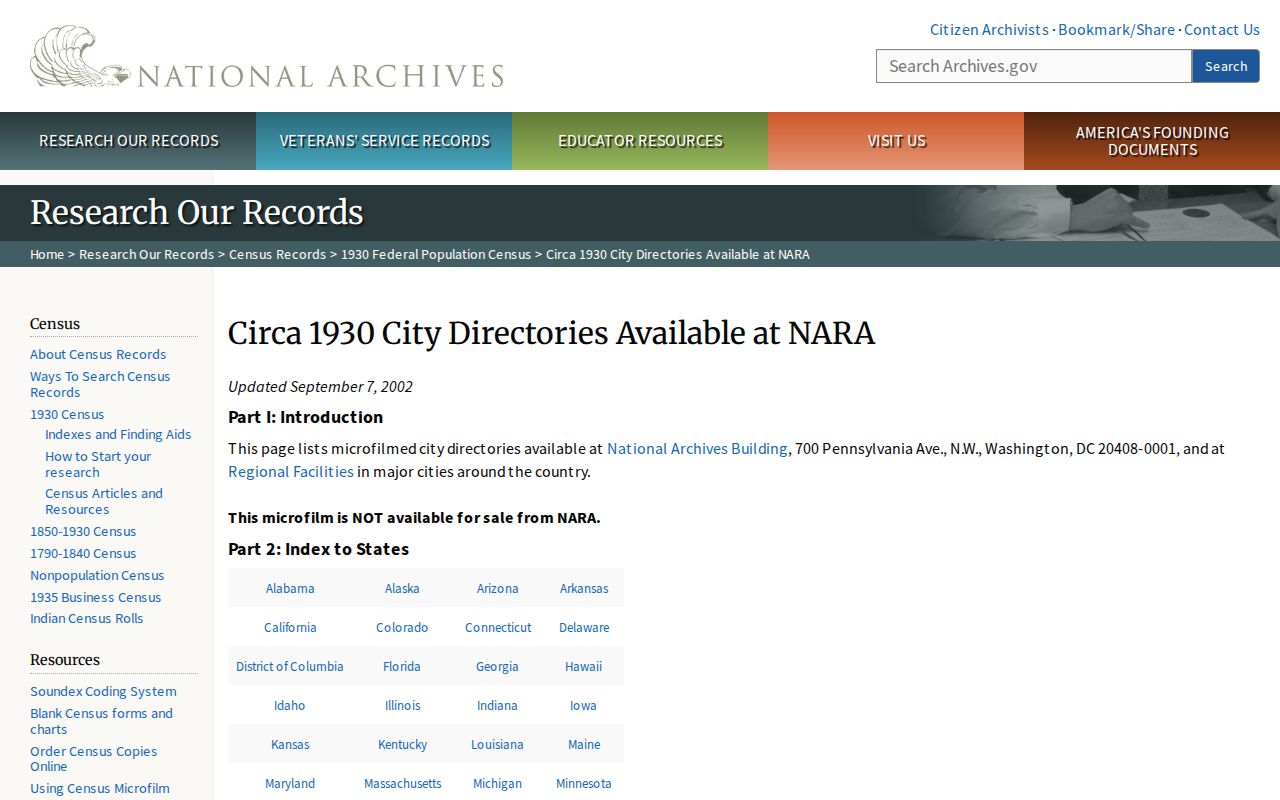
NARA's city-directory research page documents Sarasota-area coverage within Bradenton directories for 1921-22, 1927-29, and 1931.
- Choose the nearest directory year and copy the address entry plus its abbreviation key.
- Move year by year, noting first appearance, spouse notation, work, and disappearance.
- Pair a 1920, 1930, 1940, or 1950 census schedule with the closest directory editions.
- Confirm street and house number through maps or the legal description.
- Use an obituary, probate file, or later directory to explain a departure.
The 1950 census is the newest public federal census under the 72-year rule. Census households can show relationships and tenure, but the census date and directory publication date differ. Treat both as dated observations.
Date a Sarasota House Footprint
Sanborn fire-insurance maps can show whether a building stood on the site, its outline, use, construction material, and the street number used in a mapped year. Sarasota research documents Sanborn years 1925, 1929, and 1940. The History Center also has a 1923 Sarasota map, a 1950 street map, plats, aerials, and thousands of other maps.
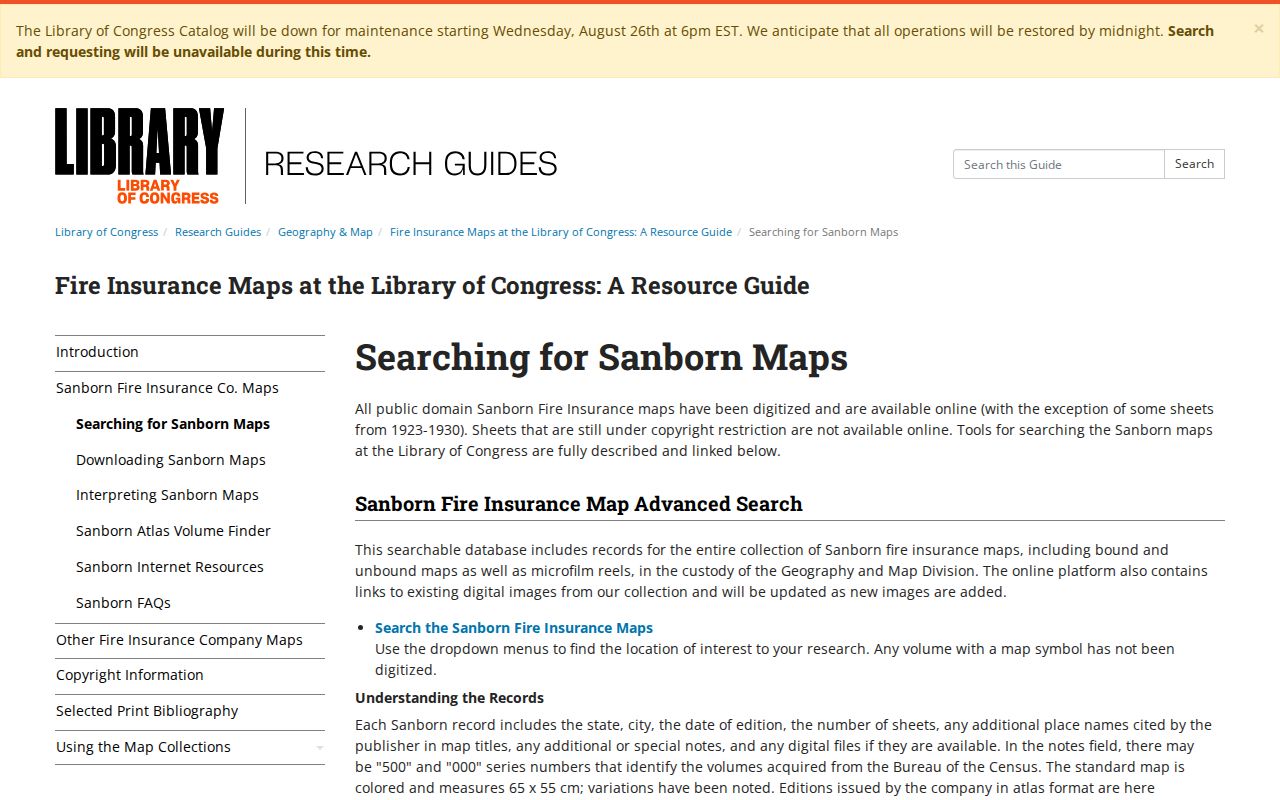
The Library of Congress Sanborn guide explains how to locate a city, sheet, and edition while accounting for catalog and copyright limits.
No authoritative Sarasota-wide renumbering year was found. Do not invent one. Compare the parcel and legal description across dated maps, then request street-name-change, annexation, or street-vacation files from City Development Applications when the address vanishes.
Sarasota Permits Fill Recent Gaps
The City permit form can search by owner, Street Number, bare Street Name, contractor or agent, parcel ID, city, postal code, permit type, status, and date window. It warns that some residential data before 1997 may be absent. Search a known parcel and address variants, then request the archived permit jacket from Development Services if the portal returns no old result.
Permits can date additions, demolition, repairs, and new construction. They often name an owner and contractor, not all previous residents. Code cases may add an address, respondent, inspector, violation, hearing, or lien outcome. Development files can explain a replat or changed street, but each fact should be tied to the filing date rather than treated as continuous occupancy.
Follow Sarasota Residents Afterward
When a person disappears from a directory, search Sarasota newspapers, probate dockets, deeds, and death information. The History Center's local newspaper coverage includes the Sarasota Times from 1910 to 1925, Herald-Tribune and predecessor runs from 1918, Sarasota Journal material, and other local titles across onsite databases, microfilm, and NewsBank. Historical Resources can help with an obituary missing from the main databases.
An obituary can name relatives, a prior city, a service, or a later address, but those statements need a second source. Probate can identify a decedent, case parties, estate dates, and sometimes property transferred through an estate. Court and marriage material before May 6, 1982 may require a Clerk search request or Public Access visit.
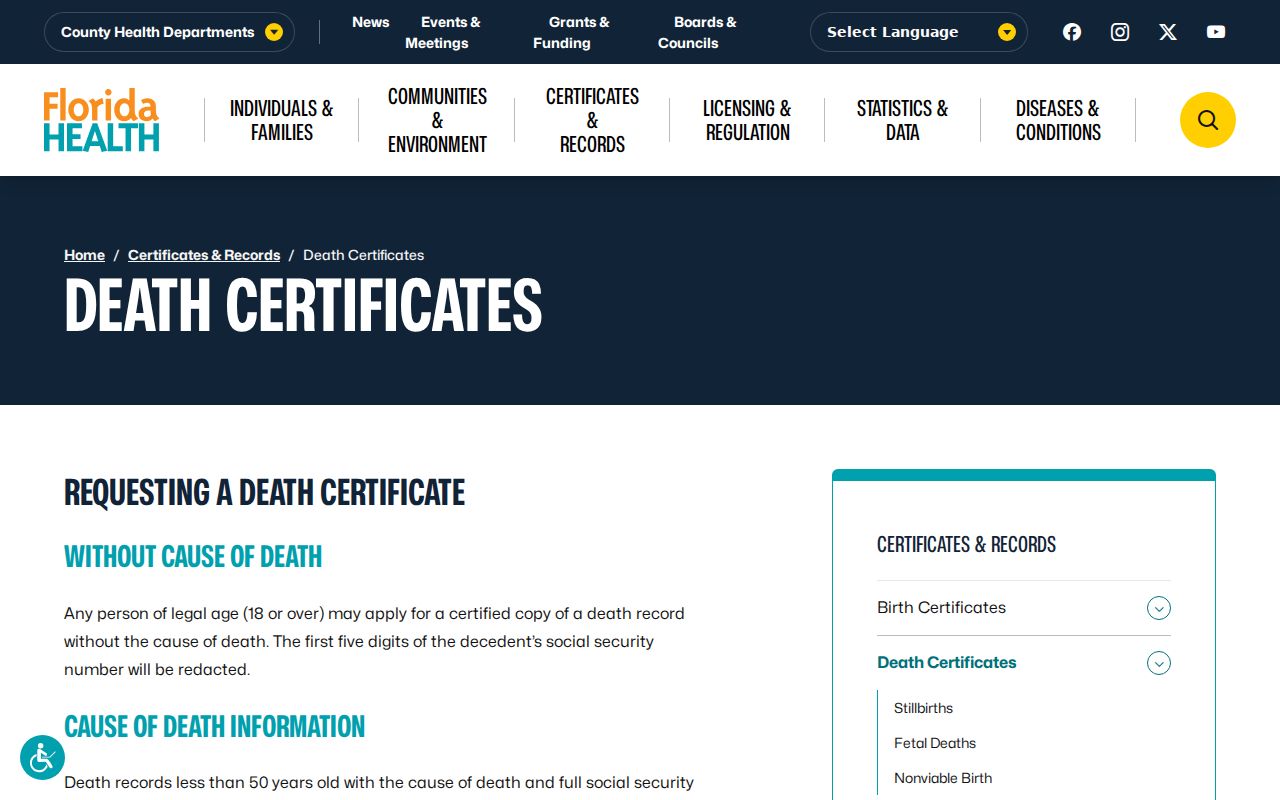
Florida death certificates have access rules, especially for cause of death during the first 50 years. The Florida Department of Health death-certificate page identifies the available certificate types and order channels.
Keep Sarasota Geography Straight
The incorporated City of Sarasota, Sarasota County, and postal Sarasota overlap but are not identical. An address marked Sarasota may be in unincorporated county territory. ZIP 34243 may reach Manatee County. Siesta Key and Palmer Ranch records often belong with county rather than city departments. Check the parcel's true jurisdiction before searching deeds, elections, courts, or permits.
Neighborhood history also changes the source mix. An early downtown, Rosemary, Gillespie Park, Newtown, or bayfront address may benefit from Polk volumes and maps. Postwar areas may be clearer in reverse directories, permits, and aerials. Older publishing could omit or segregate African American residents and businesses, and women could appear under a spouse or widow notation. Search the address section, churches, newspapers, census, and name variants before concluding a person was absent.
Limits on Sarasota Previous Residents
Previous residents cannot be reduced to a single owner list. Renters may never appear in deeds. Seasonal occupants may be absent from a directory. A telephone book omits non-subscribers, a voter file omits nonvoters and protected people, and a tax mailing address may point outside Sarasota. Adoption, sealed court, juvenile, confidential vital, protected-address, and restricted driver records remain closed.
Keep a source log with the edition, record date, address form, parcel, name as printed, and confidence level. Separate confirmed owners, listed occupants, probable household members, and unresolved names. For the directory collections themselves, consult the Sarasota directory book page.
Lawful use. Research previous residents for family and house history; respect protected addresses and never use a finding to track, harass, or harm a living person.